Cross-Platform Mobile Apps
iOS and Android apps from a single codebase, with shared business logic, shared UI and one release process.
One codebase, both app stores, and a web admin when you need one. We build cross-platform and hybrid apps for startups and businesses that want to reach every user without paying for two separate builds.
What We Do
iOS and Android apps from a single codebase, with shared business logic, shared UI and one release process.

If you are after a hybrid app, you want one codebase for both stores. We deliver that in Flutter, which runs native code instead of a webview.

Moving a slow webview or Cordova app to Flutter, screen by screen, without stopping releases.

One design system rendered identically on phones and tablets, with platform conventions respected where users expect them.

The mobile app, its web admin and the API behind both, planned as one product rather than three projects.

Data model and backend designed so AI features can be added later without a rewrite.
Choosing an approach
“Hybrid” used to mean a website wrapped in an app shell, such as Cordova or Ionic. It was cheap to build and slow to use. Modern cross-platform frameworks like Flutter and React Native compile to native code, so you keep the single codebase without the webview penalty.
We build in Flutter by default, work in React Native where your team already runs it, and recommend fully native only when a product depends on platform-specific capability.
Our default. One Dart codebase, its own rendering engine and consistent UI on iOS and Android. Best for most new products.
A good fit when your team already writes React or a React Native codebase exists. We maintain and extend it rather than rewrite.
Cordova and Ionic style apps. Fine for simple content apps, but we usually recommend migrating once performance matters.
Swift and Kotlin, for products built around deep platform features. Highest cost, because you build twice.
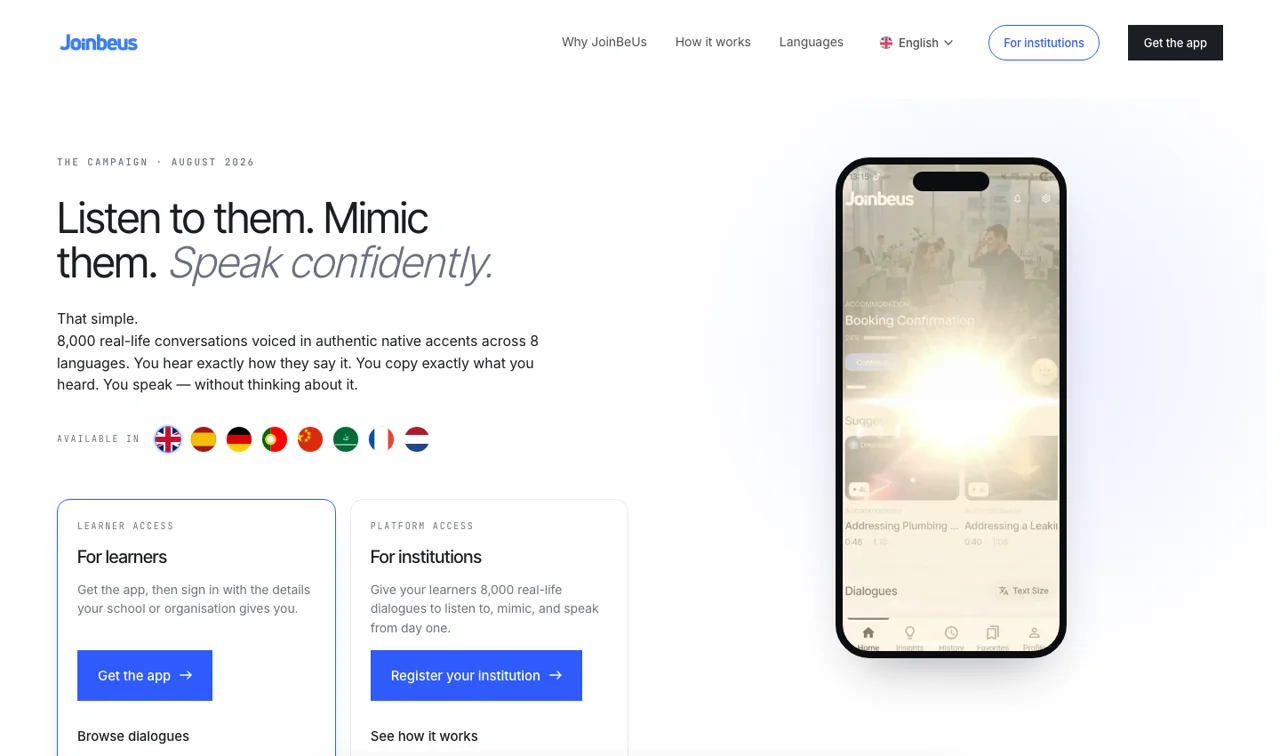
Case study: JoinBeUs, one platform across iOS, Android and a 70-page web admin
Need Answers
A traditional hybrid app runs web code inside a webview, while a modern cross-platform app built in Flutter or React Native compiles to native code. Both use one codebase for iOS and Android, but cross-platform apps are faster and feel native.
Usually, yes. One codebase means one team and one backlog instead of two, which typically cuts build and maintenance effort substantially compared with separate iOS and Android apps.
For a new product we recommend Flutter for its consistent UI and performance. If your team already works in React or you have a React Native app, staying on React Native is often the better business decision.
Yes, when it is built well. Flutter and React Native render native-speed UI, and we follow iOS and Android conventions for navigation, gestures and permissions.
Yes. We audit the current app, then migrate it to Flutter in stages so you keep shipping updates while the rebuild happens.
Tell us what you’re building, where you are today, and what you’re trying to achieve.
Hire Us on Upwork